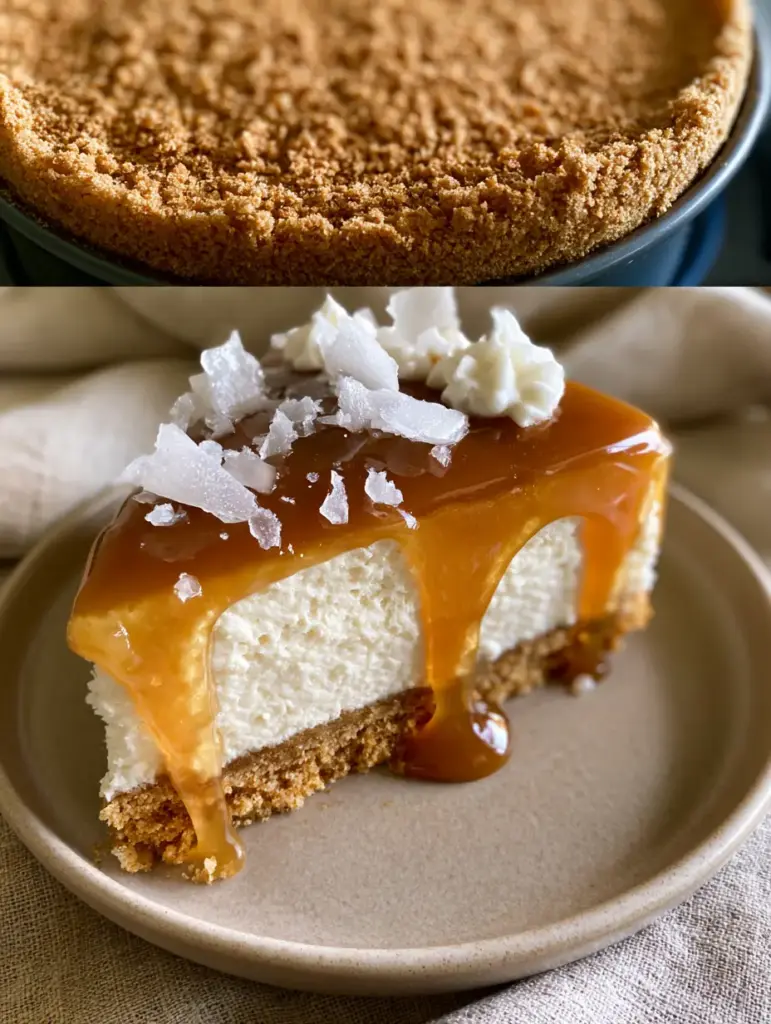
There is a specific kind of magic that happens when the sharp, jagged edge of a sea salt flake hits the smooth, viscous surface of a homemade caramel sauce. This salted caramel cheesecake isn’t just a dessert; it is a masterclass in textural contrast and balanced flavors. Imagine a thick, golden-brown graham cracker crust that provides a sturdy, buttery foundation for a center so velvety and white it looks like spun silk.
Whether you are preparing this for a festive gathering or a quiet weekend indulgence, the visual appeal is undeniable. The heavy, translucent amber caramel drips slowly down the sides of each slice, catching the morning light in a way that makes the glossy, glass-like finish shimmer. It is the ultimate centerpiece for any baker looking to elevate their dessert game with professional-grade results.
Why This Salted Caramel Cheesecake Redefines Decadence
- The Perfect Triple Layer: You’ll achieve three distinct, visually stunning layers: a crumbly base, a dense white center, and a heavy amber glaze.
- Superior Mouthfeel: By using a combination of whipped cream cheese and heavy cream, the filling remains light yet structurally sound enough for that perfect “clean cut” slice.
- The Sweet-Salty Equilibrium: We use large, jagged flakes of Maldon sea salt to cut through the richness of the viscous caramel glaze.
- Professional Aesthetic: From the thick-pressed crust to the delicate whipped cream dollops, this recipe mimics the high-end look of a luxury patisserie.
The secret to a show-stopping salted caramel cheesecake lies in the patience of the bake and the quality of the caramel. If you’ve enjoyed making mini caramel cheesecakes in the past, you will appreciate the depth of flavor that a full-sized, slow-baked version offers. The slow cooling process ensures that the top remains perfectly flat, providing the ideal canvas for our translucent amber sauce.
The Essential Components for a Flawless Graham Cracker Foundation
Pressed Graham Cracker Crumbs: 2 cups (200g). These provide the essential structural base and a nutty, toasted flavor that complements the sugar in the filling.
Unsalted Melted Butter: 1/2 cup (115g). Butter acts as the “glue” that transforms dry crumbs into a crisp, golden-brown crust that won’t crumble when sliced.
Granulated Sugar: 2 tbsp (25g). A small amount of sugar in the crust helps it caramelize slightly in the oven, adding a subtle crunch.
Ground Cinnamon: 1/2 tsp (1g). While optional, this adds a professional warmth that bridges the gap between the buttery crust and the rich caramel topping.
Achieving the Signature Velvety White Cream Cheese Center
Full-Fat Cream Cheese: 32 oz (900g). Ensure this is at true room temperature to avoid any lumps, resulting in that iconic velvety white appearance.
Granulated Sugar: 1 cup (200g). This provides sweetness without altering the pure white color of the cream cheese base.
Heavy Cream: 1/2 cup (120ml). Integrating heavy cream into the batter adds a luxurious fat content that prevents the cheesecake from becoming too dense or rubbery.
Large Eggs: 4 eggs. These are the structural “invisible” ingredients that allow the cheesecake to rise slightly and set firmly.
Pure Vanilla Extract: 1 tbsp (15ml). A high-quality extract enhances the dairy notes and provides a floral aroma that pairs beautifully with salted caramel.
If you are a fan of rich textures, you might also find the profile of our no-bake biscoff cheesecake intriguing, though the baked version here offers a much denser, traditional mouthfeel.
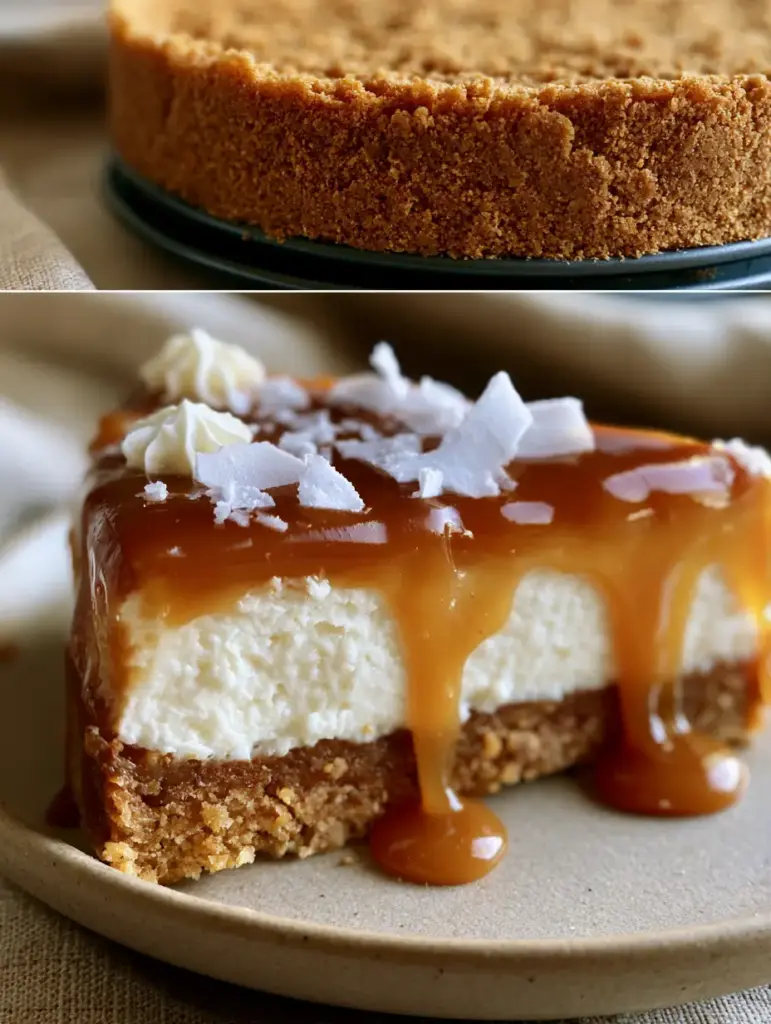
Crafting the Viscous Amber Caramel Glaze
Granulated Sugar: 1 cup (200g). This will be dry-melted until it reaches a deep, translucent amber color, forming the heart of our glaze.
Heavy Cream: 1/2 cup (120ml). Adding this to the hot sugar creates the “viscous” texture and the glossy, glass-like finish seen in the photos.
Unsalted Butter: 3 tbsp (45g). Butter provides the sheen and prevents the caramel from becoming too hard once cooled on the cake.
Maldon Sea Salt Flakes: 1 tsp (to taste). These large, jagged flakes are essential for the visual and flavor “pop” that defines a salted caramel cheesecake.
Tools Required for Professional Results
To achieve the look of the top half of our visual blueprint, you will need a 9-inch (23cm) springform pan. The removable sides are non-negotiable for releasing the cake without damaging the thick golden-brown crust.
You should also have a flat-bottomed measuring cup or glass. This is the secret tool used to press the graham cracker crumbs firmly and evenly into the pan, creating those sharp, clean angles at the base of the slice.
A large roasting pan is also required for the water bath. This “invisible” technique is what keeps the center velvety white and prevents the surface from cracking under the heat of the oven.
The Step-by-Step Evolution of a Masterpiece
Sculpting the Golden-Brown Crust
Start by preheating your oven to 325°F (163°C). In a medium bowl, combine the pressed graham cracker crumbs, sugar, and melted butter until the mixture resembles wet sand.
Transfer the mixture to your springform pan. Using the bottom of a glass, press the crumbs firmly into the bottom and about an inch up the sides. Look for a uniform thickness; a well-pressed crust is the key to preventing the caramel from soaking into the base later.
Bake the crust for 10 minutes until it is fragrant and golden-brown. Set it aside to cool completely while you prepare the velvety center. This is a similar technique used for our lemon meringue cheesecake to ensure a crisp foundation.
Whipping the Velvety Cream Cheese Filling
In a large stand mixer fitted with the paddle attachment, beat the room-temperature cream cheese and granulated sugar on medium-low speed. You are looking for a smooth, lump-free consistency, but avoid over-mixing, which can introduce too much air and cause the cake to puff and crack.
Slowly pour in the heavy cream and vanilla extract. Add the eggs one at a time, mixing just until the yellow yolk disappears. The batter should look thick, glossy, and ivory-white.
Pour the filling over the cooled crust. Smooth the top with an offset spatula. Wrap the bottom of the pan in several layers of heavy-duty aluminum foil to prevent water from seeping in during the water bath.
The Art of the Slow Bake and Cool
Place the springform pan into a roasting pan and fill the roasting pan with hot water until it reaches halfway up the sides of the cheesecake. Bake for 60-70 minutes.
The visual cue for readiness is a “slight jiggle” in the center—it should look set at the edges but move like Jell-O in the middle. Turn off the oven, crack the door slightly, and let it sit for one hour. This gradual temperature change is how you maintain that velvety white color without browning the top.
Chill the cheesecake in the refrigerator for at least 6 hours, or preferably overnight. A cold cheesecake is essential for the “glass-like finish” of the caramel to set properly upon contact.
Simmering the Amber Caramel Glaze
In a heavy-bottomed saucepan, heat the granulated sugar over medium heat. Do not stir; simply swirl the pan as the sugar melts. Watch for the color to transition from clear to a deep, translucent amber.
Once the sugar is fully melted and amber-colored, carefully whisk in the heavy cream. The mixture will bubble violently—this is normal. Continue whisking until smooth, then stir in the butter and a pinch of salt.
Let the caramel cool for about 15-20 minutes. It needs to be pourable but viscous enough to create those beautiful, slow drips down the sides of the cake. If you enjoy this process, you’ll love the technique in our caramel cinnamon rolls.
Expert Tips for a Picture-Perfect Finish
- Room Temp is Vital: Using cold cream cheese will result in tiny white lumps that ruin the “velvety” look. Take your ingredients out 2 hours before baking.
- The Foil Shield: If your caramel seems to be browning the top of the cake too much, ensure you’ve used a water bath to regulate the surface temperature.
- The Clean Slice: For the macro-shot look, dip your knife in hot water and wipe it clean between every single cut of the salted caramel cheesecake.
- Salt Timing: Only add the large flakes of sea salt once the caramel has slightly set on the cake, otherwise, the salt may dissolve into the sauce.
Preserving the Texture: Storage and Freezing
The salted caramel cheesecake should be stored in the refrigerator in an airtight container for up to 5 days. The caramel will remain viscous, though it may lose a bit of its glass-like sheen over time.
For long-term storage, you can freeze the cheesecake (without the caramel and whipped cream dollops) for up to 3 months. Thaw overnight in the fridge before adding the glaze and salt flakes for the best flavor experience.
What to Pair with Your Salted Caramel Creation
To balance the intense richness of the caramel, consider serving this with a bitter contrast, like a caramel ribbon crunch frappe. If you are hosting a dessert spread, these salted caramel chocolate chip cookies offer a chewy alternative to the creamy cheesecake texture.
For those who love fruit-based contrasts, a side of fresh berries or even a slice of banana pudding bars can provide a refreshing palate cleanser between bites of the dense, salt-flecked caramel.
Common Questions About Salted Caramel Cheesecake
You can, but for the specific ‘viscous amber’ look and ‘glass-like finish’ shown, a homemade caramel made with heavy cream and butter provides a much better texture and drip.
The most effective way is using a water bath (bain-marie). This keeps the oven moisture high and the temperature consistent, preventing the surface from drying out and splitting.
The caramel will begin to thicken as it cools. For the best drip effect, let it cool for about 20 minutes before pouring. It will fully set after 2 hours in the refrigerator.
Maldon sea salt flakes are the gold standard. Their jagged, large shape provides a satisfying crunch and a burst of saltiness that doesn’t immediately dissolve into the caramel.
Lumps occur when the cream cheese is too cold. Ensure your cream cheese is completely at room temperature before beating it with the sugar to achieve a velvety white center.
The Ultimate Salted Caramel Cheesecake Recipe
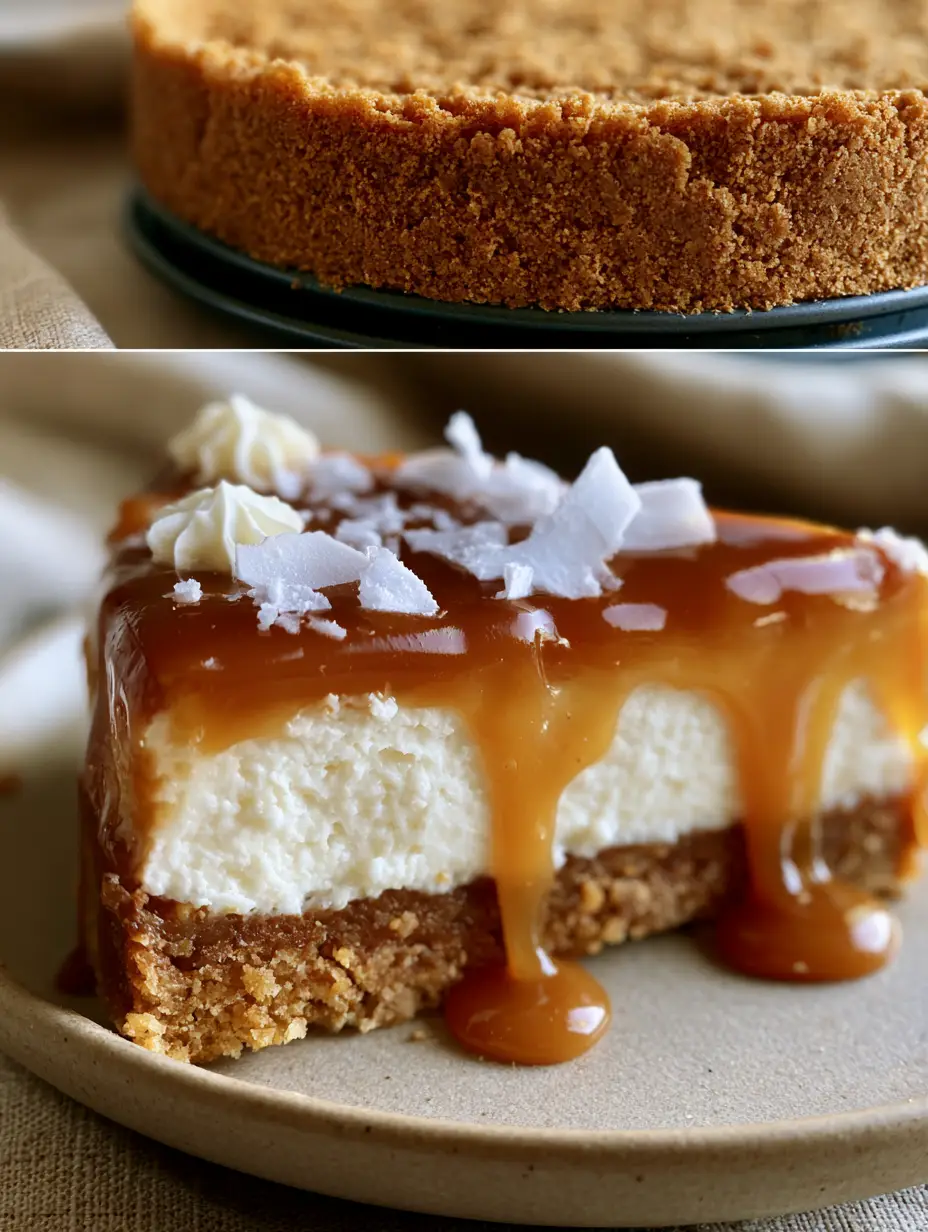
Salted Caramel Cheesecake with a Velvety Cream Cheese Center and Amber Glaze
Ingredients
Equipment
Method
- Mix graham cracker crumbs, sugar, and melted butter. Press firmly into the springform pan and bake at 325°F (163°C) for 10 minutes.
- Beat cream cheese and sugar until velvety. Mix in heavy cream and eggs one at a time until smooth.
- Pour filling over crust. Place pan in a water bath and bake for 60-70 minutes until edges are set but the center jiggles.
- Melt sugar to an amber color, whisk in heavy cream and butter. Cool until viscous.
- Pour caramel over the chilled cheesecake, add whipped cream dollops, and sprinkle with Maldon sea salt.
Notes
Clean the knife with hot water between slices for professional results.
Join the Culinary Community
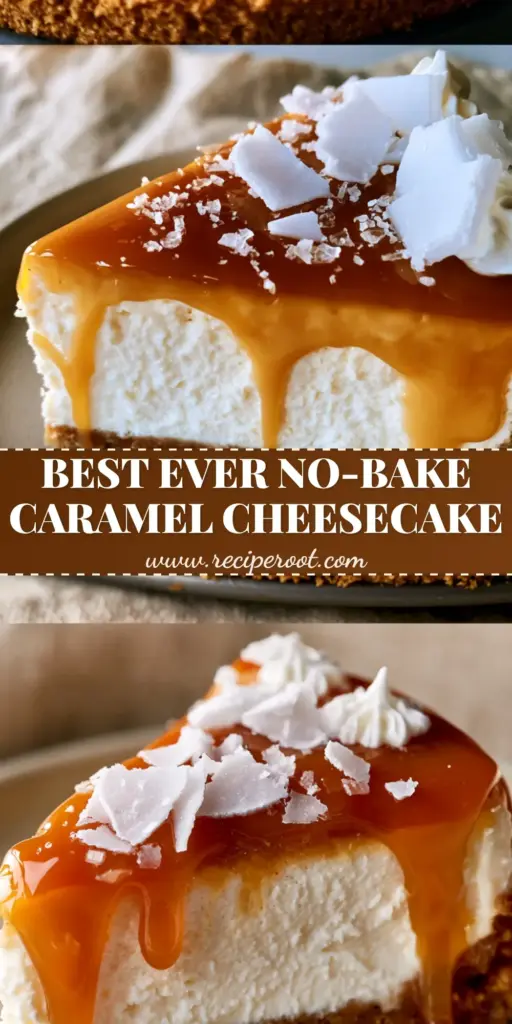
We hope this salted caramel cheesecake becomes a staple in your dessert rotation. There is nothing quite as satisfying as seeing those amber drips and jagged salt flakes come together on a matte ceramic plate. If you made this recipe, please leave a comment below and share your results!
For more visual inspiration and decadent recipes, follow us on Pinterest and subscribe to our newsletter. Happy baking!