Banana Pudding is more than just a dessert; it is a Southern institution, a staple of family reunions, and the ultimate comfort food. This particular version is designed to be the centerpiece of your table, presented in a clear glass trifle bowl to showcase every velvety layer. We are moving away from thin, runny store-bought mixes and focusing on a handcrafted, thick vanilla custard that stands tall against fresh fruit and crisp cookies.
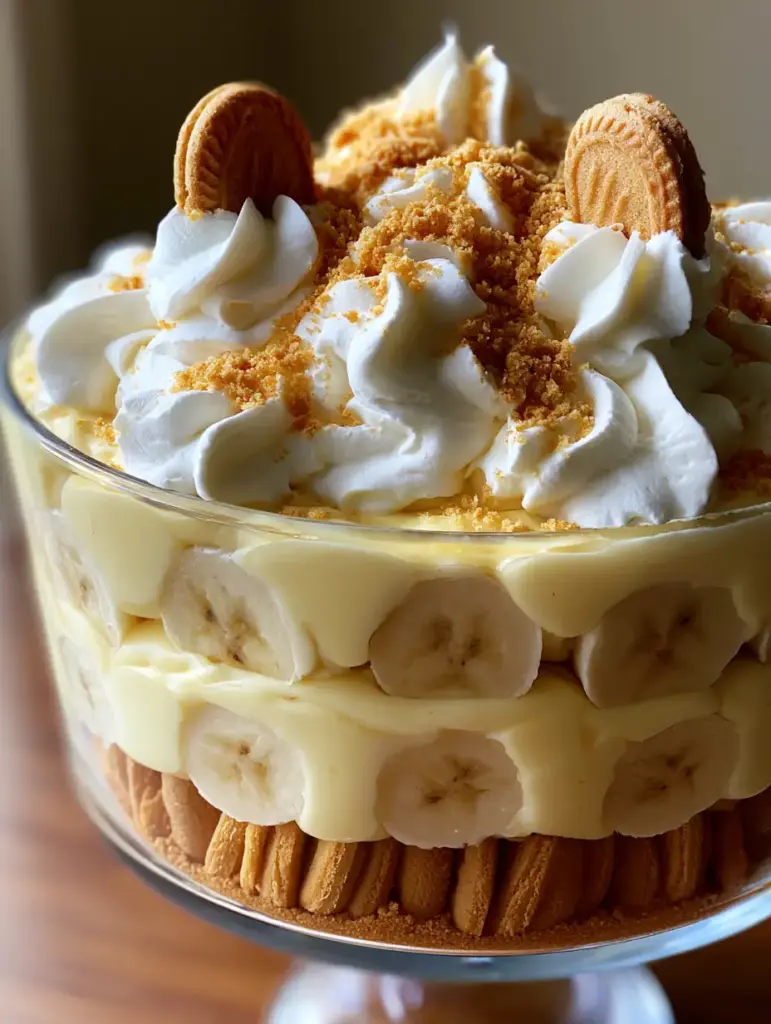
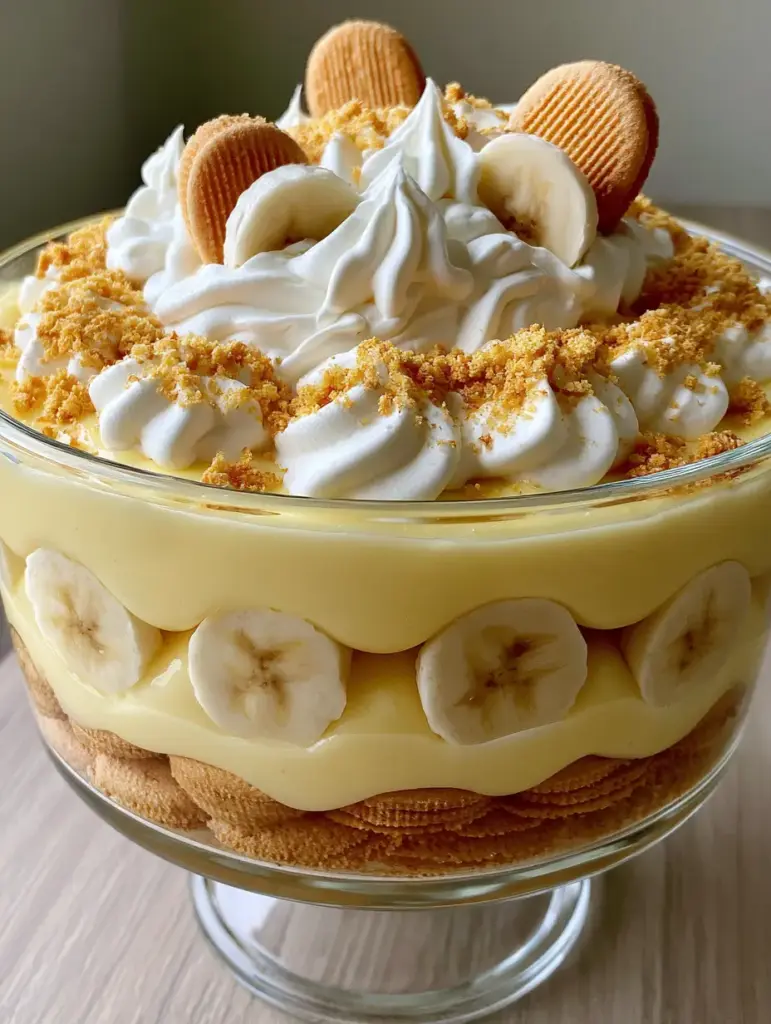
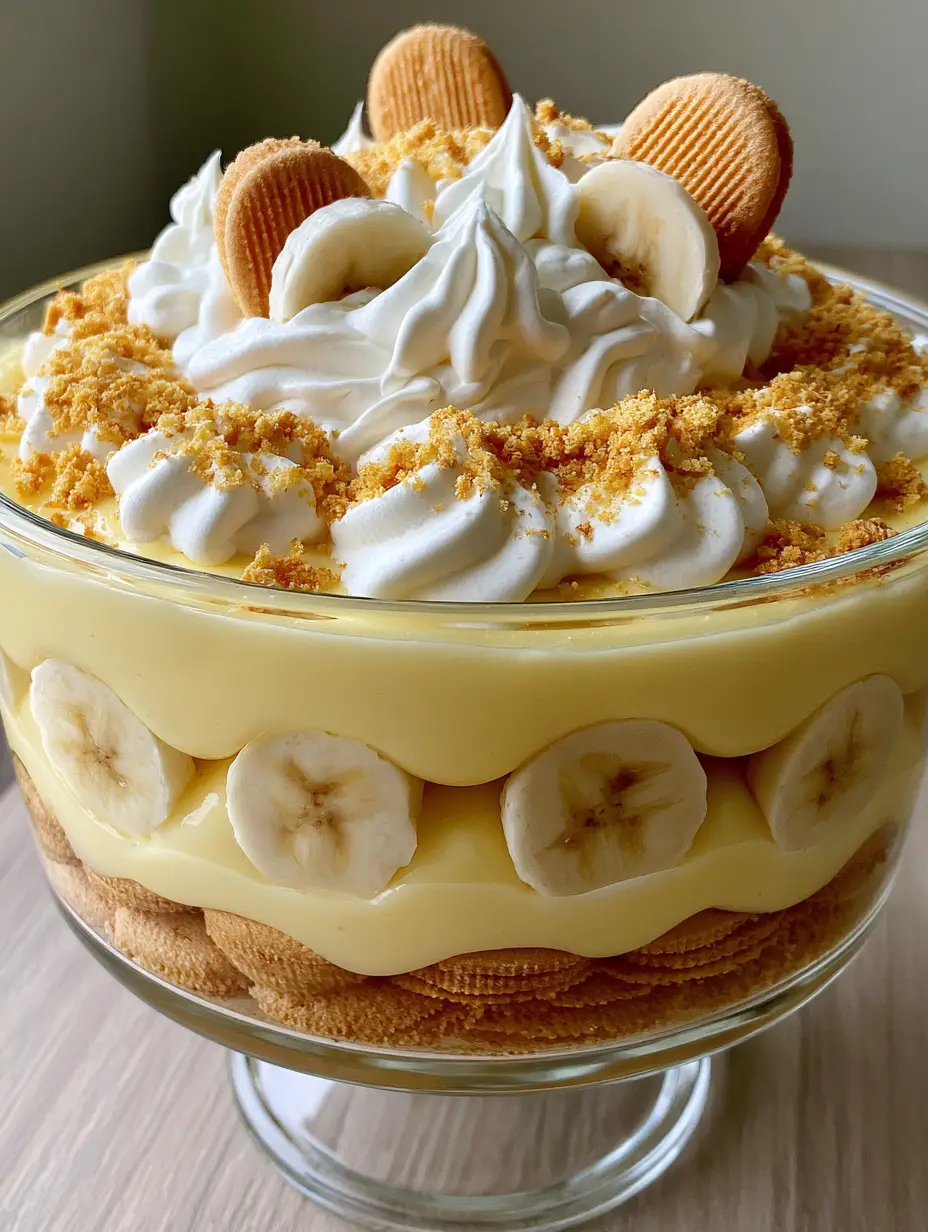
Imagine diving your spoon through a mountain of stiff, cloud-like whipped cream, hitting a layer of golden-brown wafer crumbs, and finally reaching the dense, pale yellow custard. The natural golden hour light reflects off the glass, highlighting the perfectly circular, firm slices of fresh bananas nestled between layers of golden vanilla wafers. This is the banana pudding you have seen in professional food photography, now brought to life in your own kitchen.
Every bite offers a structural masterpiece where the wafers retain a slight crunch while the custard provides a silky, melt-in-your-mouth experience. By following this scientifically balanced method, you will ensure your trifle remains distinct and beautiful for hours, rather than collapsing into a soggy mess. Whether you are a fan of creamy banana pudding or looking for something more portable like banana pudding bars, this foundational recipe is the gold standard.
The Structural Secrets of a Perfect Banana Pudding Trifle
- Extremely Thick Custard: We use a combination of egg yolks and cornstarch to create a heavy, velvety base that supports the weight of the bananas without thinning out.
- Firm Banana Slices: By selecting bananas that are yellow with just a few brown spots, we ensure the fruit holds its circular shape rather than turning into mush.
- Stiff-Peak Whipped Cream: A high-fat heavy cream whipped to stiff peaks provides the “mountain” effect seen in the visual blueprint, ensuring the garnish of whole wafers stays perfectly tucked in.
- Textural Contrast: Using both whole vanilla wafers for the base and coarse crumbs for the topping creates a professional, multi-dimensional finish.
- Visual Layering: The clear glass bowl allows for a forensic display of the custard-to-fruit ratio, making it as much a work of art as it is a dessert.
The Essential Elements of Decadent Southern Pudding
Whole Milk and Heavy Cream: A blend of 3 cups (720ml) whole milk and 1 cup (240ml) heavy cream creates the rich, fatty base necessary for a professional-grade custard. The heavy cream adds a luxurious mouthfeel that milk alone cannot achieve.
Granulated Sugar: 1 cup (200g) of sugar provides the necessary sweetness to balance the natural starchiness of the bananas and the saltiness of the wafers. It also helps tenderize the custard structure.
Egg Yolks: 6 large egg yolks provide the deep, pale yellow color and the emulsifying power to keep the custard thick and stable. Do not use whole eggs, as the whites can create a rubbery texture when cooked at high heat.
Cornstarch: 1/3 cup (40g) of cornstarch acts as the primary thickening agent, ensuring the pudding is “not runny” as per the visual requirements. It provides that specific “stand-up” quality seen in trifle displays.
Pure Vanilla Bean Paste or Extract: 1 tbsp (15ml) of high-quality vanilla is non-negotiable for that authentic “thick vanilla custard” flavor profile. Vanilla bean paste adds beautiful tiny black flecks that signal a premium, homemade dessert.
Unsalted Butter: 2 tbsp (30g) of cold butter whisked in at the very end adds a glossy sheen to the custard. This “invisible” ingredient is the secret to the velvety texture described in the prompt.
Fresh Bananas: 5 to 6 large bananas, sliced into 1/4 inch (6mm) rounds. Choose fruit that is firm to the touch to maintain the “perfectly circular” look in the glass bowl.
Vanilla Wafers: One 11oz (312g) box of whole vanilla wafers. You will need enough to create a “dense layer” at the base and have extra for tucking into the cream and crushing for the garnish.
Heavy Whipping Cream for Topping: 2 cups (480ml) of very cold heavy cream, beaten with 1/4 cup (30g) powdered sugar. This creates the “stiff, cloud-like white whipped cream peaks” that crown the dish.
Tools for Creating a Professional Visual Display
To achieve the handheld smartphone photo look from our blueprint, you will need a large, clear glass trifle bowl. This is essential for showing the distinct layers of yellow custard and white cream. A heavy-bottomed saucepan is required for the custard to prevent scorching, and a fine-mesh sieve is recommended to strain the custard for a perfectly velvety finish.
For the whipped cream, a stand mixer or electric hand mixer is necessary to reach those stiff peaks. Finally, a sharp chef’s knife will ensure your banana slices are uniform and clean, which is critical for the visual appeal through the glass walls of the bowl.
Mastering the Thick Vanilla Custard Foundation
Step 1: Scalding the Dairy and Prepping the Base
In a medium heavy-bottomed saucepan, combine the whole milk and heavy cream. Heat over medium heat, stirring occasionally, until tiny bubbles form around the edges (approximately 180°F or 82°C). Do not let it reach a rolling boil, as this can break the proteins in the dairy.
Step 2: Tempering the Egg Yolks
While the milk heats, whisk together the sugar, cornstarch, and egg yolks in a separate heat-proof bowl until the mixture is pale and thick. Slowly drizzle one ladle of the hot milk into the egg mixture while whisking constantly. This “tempering” process prevents the eggs from scrambling when they hit the hot pan.
Step 3: Thickening to a Velvety Finish
Pour the tempered egg mixture back into the saucepan with the remaining milk. Cook over medium-low heat, whisking vigorously and constantly. Watch for the custard to thicken—it should happen suddenly, coating the back of a spoon and showing a slow “bloop” when it bubbles. Remove from heat immediately and stir in the vanilla and butter until the butter is fully melted and the custard is glossy.
Step 4: Chilling for Stability
Transfer the custard to a bowl and press plastic wrap directly onto the surface to prevent a skin from forming. Refrigerate for at least 4 hours, or until completely cold. This step is vital for the “extremely thick” texture required for the trifle layering.
Assembling the Southern Trifle Masterpiece
Step 5: The Foundation Layer
At the bottom of your clear glass trifle bowl, create a dense foundation of whole vanilla wafers. You want a solid golden-brown base that will absorb just enough moisture from the custard to become cake-like while maintaining its structure.
Step 6: Layering the Custard and Bananas
Spread one-third of your chilled, thick vanilla custard over the wafers. Arrange a generous layer of circular banana slices over the custard, pressing them slightly against the glass so they are visible from the side. Repeat these layers—wafers, custard, bananas—until you reach the top of the bowl, ending with a layer of custard.
Step 7: Creating the Whipped Cream Mountain
In a cold bowl, whip the heavy cream and powdered sugar until stiff peaks form. The cream should be thick enough to hold its shape when the whisk is lifted. Pile the cream onto the pudding, using a spatula to create swirling, cloud-like peaks that overflow slightly from the bowl.
Step 8: The Forensic Finishing Touches
To match our Midjourney prompt exactly, tuck three whole vanilla wafers into the whipped cream at an angle near the center. Finely crush a handful of extra wafers and sprinkle the coarse golden crumbs generously over the top. This provides the final sensory cue of “crunch” against the soft cream.
Expert Tips for Success
- Prevent Browning: If you are worried about bananas turning brown, toss the slices lightly in a tablespoon of lemon juice before layering; the acidity slows oxidation without affecting the flavor.
- The Snap Test: For the best wafer texture, ensure your cookies are fresh and “snappy” before assembly; stale wafers will turn to mush too quickly.
- Custard Consistency: If your custard feels too thin after cooking, simmer for an additional 60 seconds while whisking; the cornstarch needs heat to fully hydrate and thicken.
- Temperature Control: Always whip your cream in a chilled bowl; the colder the fat, the more stable the air bubbles will be, resulting in those required stiff peaks.
Storage and Make-Ahead Advice
Banana Pudding is best served after it has chilled for at least 4-6 hours, allowing the wafers to soften slightly into a “lush” texture. It will keep in the refrigerator for up to 2 days. Beyond that, the bananas may begin to release moisture, thinning the custard.
We do not recommend freezing this recipe. The custard base contains cornstarch and egg yolks, which can separate and become grainy upon thawing, ruining the velvety texture we worked so hard to achieve.
What to Serve With This Southern Classic
This decadent dessert is the perfect follow-up to a heavy Southern meal. If you enjoy this flavor profile, you might also love our banana-pudding-lush for a cream-cheese twist, or try Paula Deen’s Banana Pudding for a version that uses cream cheese and sweetened condensed milk. For a smaller gathering, these Nilla Wafer banana pudding cups offer the same visual appeal in individual servings.
Frequently Asked Questions
While you can, instant pudding lacks the structural integrity and rich, velvety mouthfeel of a cooked custard. For a trifle that needs to hold its layers and support a mountain of whipped cream, the handmade egg-yolk base is superior.
While a clear glass trifle bowl is recommended for the visual appeal described in our blueprint, you can use any large glass bowl. The key is transparency so the beautiful layers of custard and bananas are visible.
To prevent oxidation, use bananas that are firm and just ripe. You can also lightly toss the slices in lemon or pineapple juice; the acid acts as a natural preservative without significantly altering the flavor of the trifle.
For the best texture, wait at least 4 to 6 hours. This allows the vanilla wafers to absorb a small amount of moisture from the custard, transforming them into a soft, cake-like consistency while keeping the bananas firm.
Runny custard usually results from undercooking the cornstarch or not tempering the egg yolks correctly. Ensure the mixture reaches a gentle boil while whisking to fully activate the thickening properties of the cornstarch.
The Ultimate Southern Banana Pudding Trifle Recipe
Banana Pudding: The Ultimate Thick and Creamy Southern Trifle Recipe
Ingredients
Equipment
Method
- In a saucepan, heat milk and heavy cream over medium until simmering (180°F).
- Whisk sugar, cornstarch, and yolks. Slowly whisk in a ladle of hot milk, then return the whole mixture to the pan.
- Whisk constantly over medium-low heat until the custard is thick and velvety. Stir in vanilla and butter.
- Cover with plastic wrap directly on surface and refrigerate for 4 hours until firm.
- Create a dense layer of whole vanilla wafers at the base of the trifle bowl.
- Alternate layers of chilled custard and firm banana slices, pressing fruit against the glass.
- Whip heavy cream to stiff peaks and pile onto the trifle. Garnish with whole wafers and coarse crumbs.
Notes
Ensure your custard is completely chilled before layering to maintain distinct visible tiers.
Closing & Call to Action
This Banana Pudding Trifle is a testament to the beauty of classic Southern flavors and professional culinary technique. By focusing on a thick, handmade custard and careful layering, you create a dessert that is as visually stunning as it is delicious. We would love to see your recreations! Please leave a comment below with your results and don’t forget to share your photos and follow us on Pinterest for more elite recipe blueprints.