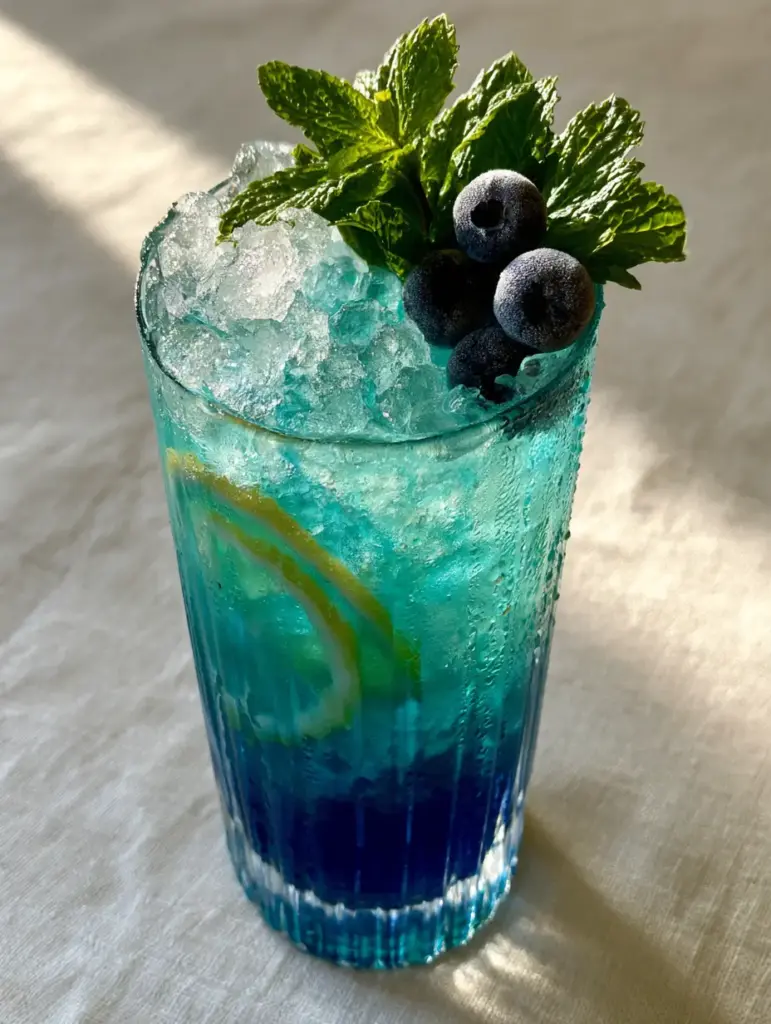
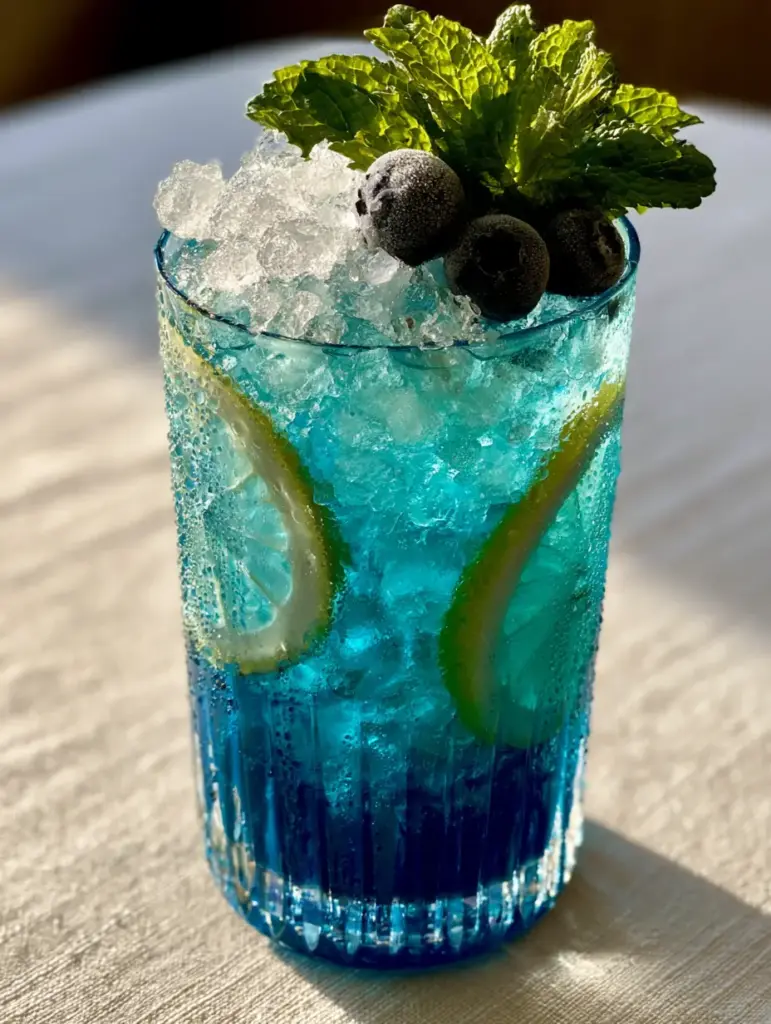
There is nothing quite like the first sip of a cold drink on a sweltering July afternoon. But what if that drink didn’t just taste like summer, but looked like a slice of a tropical paradise? This Blue Lemonade is the ultimate showstopper, offering a vibrant, naturally electric blue hue that seems to glow from within the glass.
Forget the artificial syrups and neon powders of your childhood. This recipe leverages the botanical magic of butterfly pea flowers to create a sapphire-to-turquoise gradient that is as sophisticated as it is refreshing. From the fine beads of cold condensation to the frosted berries on top, every element of this drink is designed for peak sensory enjoyment.
Whether you are hosting an elegant garden party or simply want to elevate your hydration game, this beverage delivers a professional aesthetic with minimal effort. It is the crown jewel of non-alcoholic summer drinks, proving that you don’t need spirits to create a complex and beautiful cocktail-style experience.
Why This Electric Blue Citrus Elixir Works
- Naturally Vibrant Color: We achieve that deep sapphire base and glowing turquoise top using pH-sensitive botanical flowers, ensuring no artificial dyes are needed.
- Textural Contrast: The combination of crystal-clear crushed ice and the “frosted” texture of chilled blueberries creates an ultra-cold mouthfeel.
- Visual Sophistication: Tucking translucent lemon wheels against the interior of ribbed glassware adds a layer of professional culinary styling found in high-end bistros.
- Perfectly Balanced Tartness: The zing of fresh-squeezed citrus cuts through the floral notes of the blue base for a crisp, clean finish.
The Essential Elements of an Electric Blue Hue
To achieve the specific visual blueprint of this Blue Lemonade, we must select ingredients that offer both flavor and structural integrity. Here is what you will need for your shopping list.
Dried Butterfly Pea Flowers: 1/4 cup (approx. 10g). These flowers are the source of the “electric” color; when steeped, they release a deep blue pigment that reacts to the acid in lemons.
Fresh Lemons: 6 to 8 large lemons to yield 1 cup (240ml) of juice. Fresh juice is non-negotiable here, as bottled versions lack the bright acidity and translucent clarity required for the lemon wheel garnishes.
Granulated Sugar: 1 cup (200g). This creates a simple syrup base that suspends the blue pigment and ensures the drink isn’t overly tart or thin in texture.
Filtered Water: 4 cups (960ml). Using filtered water prevents mineral cloudiness, ensuring your crushed ice and lemonade base remain crystal clear.
Fresh Mint Sprigs: 4 large sprigs. The “lush, bright green” described in our visual guide comes from using the freshest possible mint, kept in ice water until the moment of serving.
Fresh Blueberries: 1/2 cup (75g). These will be placed in the freezer to achieve that specific “frosted” look that signals a deep, bone-chilling cold to the drinker.
Professional Tools for the Perfect Pour
Creating a drink this beautiful requires more than just a spoon. To match the visual prompt exactly, you will need a few specific pieces of equipment.
Ribbed Glassware: A tall, elegant ribbed glass is essential. The vertical ridges catch the light and emphasize the sapphire-to-turquoise gradient of the liquid.
Mandoline Slicer: To achieve those paper-thin, “translucent” lemon wheels, a mandoline is the best tool. It ensures every slice is uniform so they sit flat against the glass wall.
Ice Crusher or High-Speed Blender: The recipe calls for “crystal-clear crushed ice.” Traditional cubes won’t provide the same surface area for condensation or the same “packed” look in the glass.
Fine Mesh Strainer: This is used to remove the butterfly pea petals after steeping, ensuring the final Blue Lemonade is perfectly smooth and free of debris.
Step-By-Step: Crafting the Gradient Blue Lemonade
1. Creating the Botanical Blue Concentrate
Begin by bringing 2 cups (480ml) of filtered water to a gentle boil. Remove from heat and add 1/4 cup (10g) of dried butterfly pea flowers. Let them steep for 8-10 minutes until the water is an opaque, deep sapphire blue.
Strain the liquid through a fine-mesh sieve into a glass jar, discarding the spent petals. Stir in 1 cup (200g) of granulated sugar while the liquid is still warm, whisking until fully dissolved. Allow this blue “simple syrup” to cool completely in the refrigerator.
2. Prepping the “Frosted” Garnishes
Place your fresh blueberries on a small tray and pop them into the freezer for at least 30 minutes. This creates the “frosted whole blueberries” effect seen in our visual blueprint, as the moisture in the air freezes onto the skin upon contact.
While the berries freeze, slice your lemons into paper-thin wheels. Aim for slices so thin they are nearly translucent when held up to the light. Set these aside on a damp paper towel to prevent them from drying out.
3. Preparing the Citrus Base
Squeeze enough lemons to collect 1 cup (240ml) of fresh juice. For the clearest result, strain the juice once more to remove any stray pulp or seeds. Mix this juice with 2 cups (480ml) of cold filtered water. This creates a concentrated lemonade base that we will layer later.
4. Assembling the Gradient Visuals
Take your tall ribbed glass and slide two translucent lemon wheels against the inside wall. Use a long spoon to hold them in place as you pack the glass to the brim with crushed ice. The ice will pin the lemons against the glass.
Pour the blue syrup into the bottom third of the glass. Slowly and carefully pour the clear lemon juice mixture over the back of a spoon onto the ice. You will see a beautiful transition where the blue meets the acid, shifting from sapphire at the base to a glowing turquoise near the top.
5. The Final Flourish
Top the drink with your lush sprig of fresh mint, tucking the stem into the ice. Place three of your pre-chilled, frosted blueberries on the very top of the ice mound. Within moments, you will see fine beads of cold condensation dripping down the ribbed glass, signaling it is ready to enjoy.
Expert Tips for Visual and Flavor Success
- The “Spoon Pour” Technique: To maintain the sapphire-to-turquoise gradient, always pour the citrus layer slowly over the back of a spoon. This breaks the fall of the liquid and prevents immediate mixing.
- Temperature Matters: Ensure your blue syrup is chilled before assembly. If it is warm, it will melt the crushed ice instantly, diluting the Blue Lemonade and ruining the condensation effect.
- Clarity is Key: If your ice looks cloudy, try using boiling water that has cooled down to make your ice cubes before crushing them. This removes air bubbles for that “crystal-clear” look.
- Mint Revival: If your mint looks wilted, soak it in a bowl of ice water for 15 minutes. It will snap back to a “bright green” and become structurally sound enough to stand tall in the glass.
Storage and Make-Ahead Instructions
The Blue Lemonade components can be prepared in advance, which is perfect for outdoor wedding drinks or large gatherings. The butterfly pea syrup can be stored in an airtight glass container in the refrigerator for up to 2 weeks.
The fresh lemon juice mixture is best when used within 24 hours to maintain its bright, zesty flavor profile. Do not assemble the drink until the moment of serving, as the crushed ice will melt and the “frosted” effect on the blueberries will disappear after about 15 minutes at room temperature.
Perfect Pairings for a Summer Soiree
This Blue Lemonade is a versatile companion for a variety of treats. If you are looking for more vibrant citrus options, try serving it alongside a strawberry kiwi lemonade for a colorful “pink and blue” drink station.
For a complete summer spread, pair this refreshing drink with our classic summer drinks collection. If you have a sweet tooth, the tartness of the lemon beautifully balances the richness of chocolate stuffed cookies or even a decadent tray of brookies.
Frequently Asked Questions
For this recipe, fresh lemon juice is highly recommended. Bottled juice is often cloudy and lacks the bright acidity needed for the visual gradient and the clarity required for the lemon wheels.
Simply place dry, fresh blueberries in the freezer for about 30 minutes. When you take them out, the moisture in the air will instantly freeze on their skin, creating that beautiful frosted look.
Yes, butterfly pea flower tea has been consumed for centuries in Southeast Asia. It is caffeine-free and widely used as a natural food coloring in teas, rice, and desserts.
The vibrant blue color comes from dried butterfly pea flowers. These flowers are naturally rich in anthocyanins, which create a deep blue pigment when steeped in water.
Butterfly pea flower tea is pH-sensitive. When the acidic lemon juice is added, the pH level changes, causing the deep blue (sapphire) to shift toward lighter turquoise or even purple tones.
The Ultimate Blue Lemonade Recipe Card
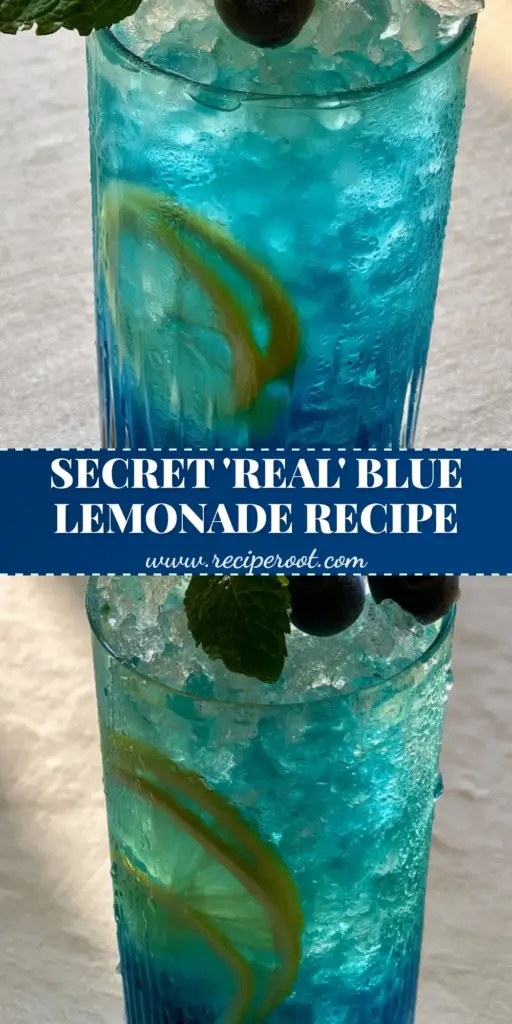
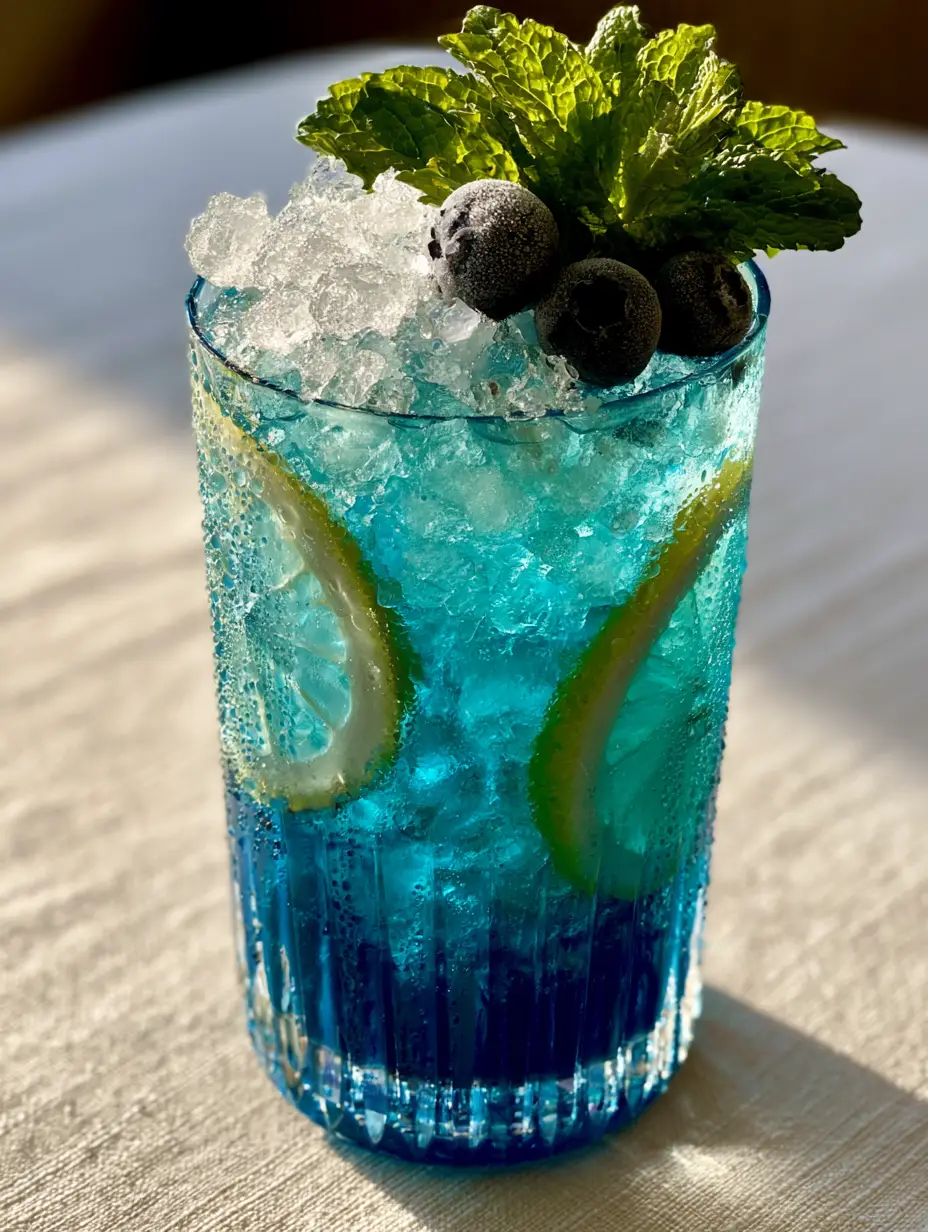
Blue Lemonade Recipe: The Naturally Electric Summer Refresher
Ingredients
Equipment
Method
- Steep butterfly pea flowers in 2 cups of boiling water for 8 minutes. Strain and dissolve sugar into the hot liquid.
- Place blueberries in the freezer to frost. Refrigerate the blue syrup until cold.
- Place lemon wheels in ribbed glasses, fill with crushed ice. Pour blue syrup at bottom, then layer lemon juice mixed with water over the top to create a gradient.
Notes
Ensure the syrup is fully chilled to keep the ice from melting too fast.
Closing & Call to Action
This Blue Lemonade is more than just a drink; it is a sensory experience that brings the “naturally electric” beauty of botanical ingredients to your kitchen table. Its stunning gradient and frosted garnishes make it a must-try for any home cook looking to impress. If you enjoyed this recipe, please leave a comment below and let us know how your gradient turned out!
Don’t forget to share your creations with us! Follow and tag recipe_root on Pinterest to see more vibrant DIY summer drinks and culinary inspiration. Pin this recipe to your “Summer Refreshments” board so you always have it on hand!