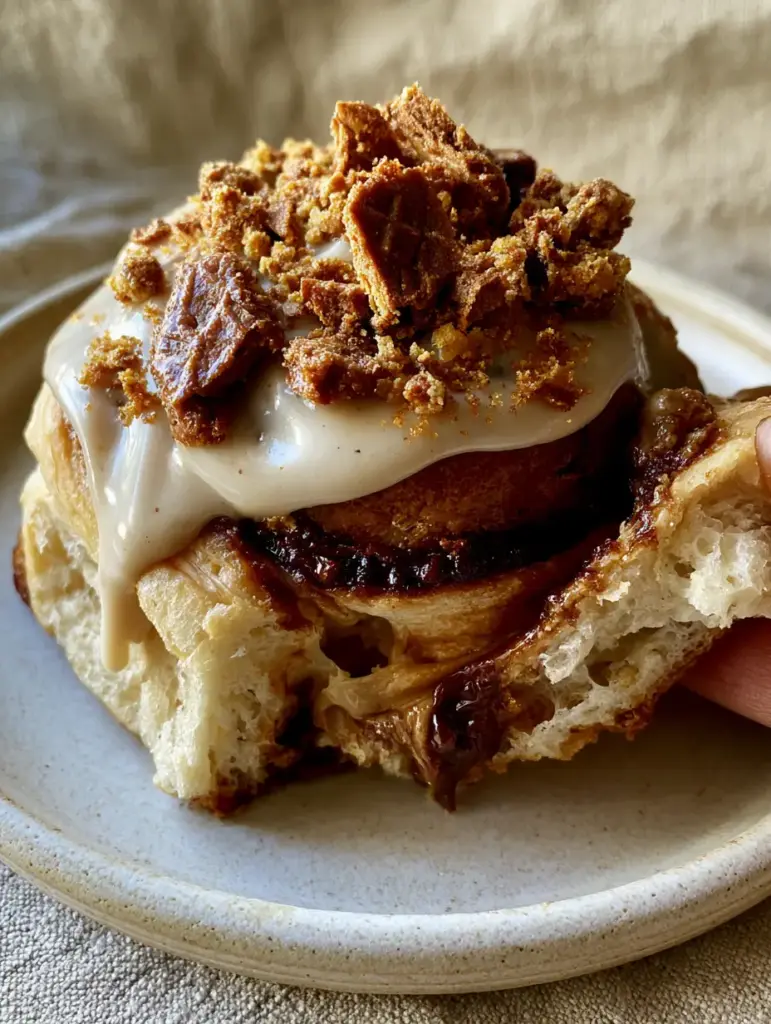
Imagine pulling apart a warm, oversized bun to reveal a steaming, ultra-fluffy interior with visible airy pockets that practically melt on your tongue. These Biscoff Cinnamon Rolls are not just a breakfast pastry; they are a sensory experience designed for the true cookie butter obsessed. By swirling deep, glistening layers of melted Lotus Biscoff cookie butter into a pale golden-brown yeast dough, we create a masterpiece that rivals even the most famous bakeries.
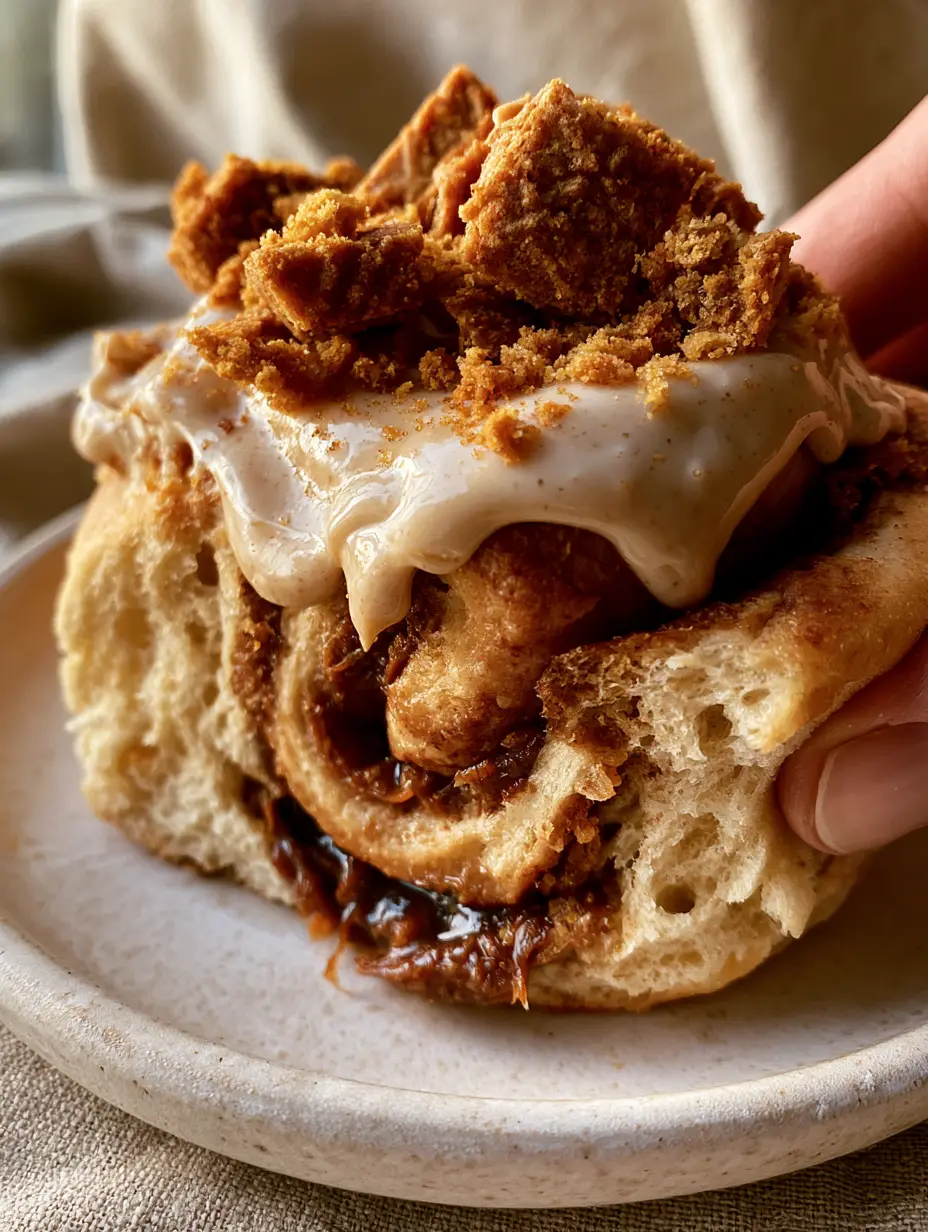
The crowning glory is a thick, opaque cookie butter cream cheese frosting that drapes over the sides in slow, heavy drips. Garnished with a textural contrast of large crunchy Biscoff cookie chunks and fine golden biscuit sand, every bite offers a symphony of caramel, cinnamon, and spice. Whether you are a seasoned baker or a weekend enthusiast, this recipe delivers the professional-grade results you see in high-end culinary photography.
Why These Cookie Butter Swirls Are Better Than The Bakery
- The Perfect Crumb: Using a high-protein bread flour ensures that signature “stretch” and “pull-apart” texture visible in every macro shot.
- Double Biscoff Infusion: We don’t just put cookie butter in the filling; it’s whipped into the cream cheese glaze and dusted over the top for maximum flavor density.
- Engineered Fluffiness: A specialized proofing technique creates those sought-after airy pockets and a soft, pale golden-brown crust.
- Visual Masterpiece: Designed to look as good as it tastes, featuring a glistening dark swirl against ivory-colored frosting.
The Essential Elements for Cookie Butter Perfection
To achieve the visual and structural integrity of these Biscoff Cinnamon Rolls, each ingredient serves a scientific purpose. Do not skip the foundational elements like salt or high-quality yeast, as these are the “invisible” ingredients that make the “visible” beauty possible.
Bread Flour: 4 1/2 cups (560g) of high-protein flour is required to create the gluten network that traps warm steam, leading to that ultra-fluffy interior. Unlike all-purpose flour, bread flour gives the rolls enough strength to support the heavy Biscoff filling.
Lotus Biscoff Cookie Butter: You will need 1 1/2 cups (380g) total. One portion creates the dark, glistening spiral inside, while the other creates the ivory tint and spiced flavor in the frosting.
Whole Milk: 1 cup (240ml) of warm milk (110°F/43°C) acts as the hydration agent. It softens the crumb and provides the sugars necessary for the yeast to produce those beautiful airy pockets.
Unsalted Butter: 1/2 cup (115g) for the dough and 1/4 cup (55g) for the frosting. Butter provides the fat that yields a “short” crumb, making the dough tender enough to pull apart by hand.
Active Dry Yeast: 1 packet (7g) is the engine of this recipe. It creates the rise and the characteristic yeasty aroma that fills your kitchen as the rolls bake to a pale golden-brown.
Cream Cheese: 4 oz (115g) of full-fat brick cream cheese. This provides the “opaque ivory” color and the necessary tang to balance the intense sweetness of the Biscoff biscuit crumbs.
Biscoff Biscuits: 8-10 cookies, crushed into a mix of large crunchy chunks and fine golden biscuit sand. This adds the final layer of texture that defines the visual recipe blueprint.
Professional Tools for Artisan Results
To recreate the macro-quality look of a single, oversized Biscoff cinnamon roll, you need the right gear. A heavy-duty stand mixer with a dough hook is preferred to ensure the dough is kneaded until it is smooth and elastic.
A sharp serrated knife or unflavored dental floss is essential for cutting the rolls without compressing the airy pockets. You will also need a 9×13 inch (23×33 cm) ceramic or metal baking pan to achieve that “pull-apart” look where the rolls just touch each other, creating soft, pale sides.
Step-by-Step Mastery: Achieving the Perfect Pull-Apart
Preparing the Signature Fluffy Yeast Dough
In the bowl of your stand mixer, combine the warm milk (240ml), a tablespoon of sugar, and the yeast. Let it sit for 5-10 minutes until a thick foam forms on the surface; this is the first sensory cue that your yeast is alive and ready to lift that heavy dough.
Add the melted butter, eggs, and the remaining sugar. Gradually incorporate the bread flour and salt. Knead on medium-low speed for about 5-7 minutes. Look for the dough to clear the sides of the bowl—it should be tacky but not sticky, feeling like a soft earlobe when pressed.
Place the dough in a greased bowl and cover it with a warm, damp cloth. Let it rise in a draft-free spot until doubled in size. This “bulk fermentation” is where those visible airy pockets are born. If you’ve enjoyed making blueberry cinnamon rolls, you’ll recognize this crucial stage of development.
Creating the Glistening Biscoff Swirl
Punch down the risen dough and roll it out on a lightly floured surface into a large rectangle, roughly 12×18 inches (30×45 cm). Warm 3/4 cup (190g) of Biscoff cookie butter in the microwave for 20 seconds until it is easily spreadable but not liquid.
Spread the cookie butter in an even, thick layer across the dough, leaving a small margin at the edges. Sprinkle a light dusting of brown sugar and cinnamon over the spread. Roll the dough tightly from the long edge, creating a log. Using your floss or serrated knife, cut into 12 oversized rolls.
The Second Proof and The Pale Golden Bake
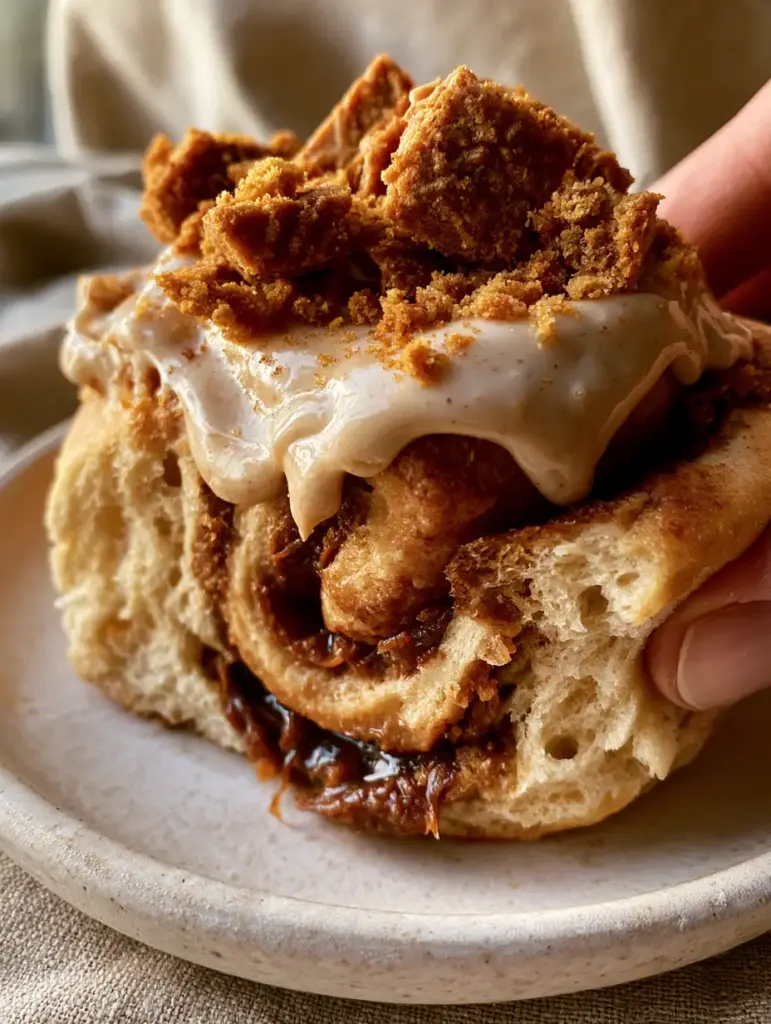
Place the rolls in your prepared baking dish. Cover and let them rise again for 30-45 minutes. They should be touching each other and look “puffy.” This second rise is what ensures the “steaming, ultra-fluffy interior” after they hit the oven.
Bake at 350°F (175°C) for 20-25 minutes. Watch for the visual cue: you are looking for a pale golden-brown finish. Over-baking will result in a dry roll, losing that handheld smartphone photo-ready softness. Much like Nutella rolls, the sugar in the filling can burn if the oven is too hot, so keep a close eye on them.
Whipping the Opaque Ivory Frosting
While the rolls bake, beat the cream cheese and remaining butter until smooth. Incorporate 1/2 cup (125g) of Biscoff cookie butter and 1 1/2 cups (180g) of powdered sugar. The result should be a thick, opaque, ivory-colored glaze.
As soon as the rolls come out of the oven, let them cool for only 5 minutes. Apply the frosting while they are still warm so it begins “slowly dripping down the sides” as described in our visual prompt. Immediately top with the mix of crunchy Biscoff chunks and fine biscuit sand.
Expert Tips for Bakery-Standard Rolls
- Room Temp is Key: Ensure your cream cheese and butter for the frosting are truly at room temperature to avoid lumps in your ivory glaze.
- Don’t Over-Flour: When rolling out the dough, use just enough flour to prevent sticking. Too much flour will result in a dense roll rather than the fluffy interior we want.
- The Warm Window: For that “warm steam” effect, serve the rolls within 15 minutes of frosting. This is the peak moment for texture and aroma.
- Cookie Butter Consistency: If your Biscoff spread is too firm, a quick 10-second zap in the microwave makes it the perfect glistening consistency for swirling.
Serving and Pairing Suggestions
These Biscoff Cinnamon Rolls are incredibly rich, so they pair beautifully with a strong, bitter beverage like a dark roast coffee or a brown butter espresso latte. If you are serving these as part of a larger brunch, consider balancing the sweetness with something fresh like strawberry rhubarb pie or even a refreshing coconut pineapple lemonade.
For those hosting a themed event, these rolls fit perfectly alongside banana pudding cookies for a “biscuit-inspired” dessert spread. The caramel notes of the Biscoff complement the vanilla wafers in the cookies brilliantly.
Storage, Reheating, and Make-Ahead Advice
These rolls are best enjoyed fresh, but you can store leftovers in an airtight container for up to 3 days. To regain that “steaming ultra-fluffy” texture, reheat a single roll in the microwave for 15-20 seconds. This softens the Biscoff swirl and makes the glaze melt slightly.
You can also freeze the unbaked rolls after cutting them. Simply let them thaw and perform their second rise in the refrigerator overnight before baking the next morning. This is a great hack for holiday mornings or a 4th of July brunch.
Frequently Asked Questions
While you can, bread flour is highly recommended. The higher protein content is what creates the airy pockets and fluffy interior structure seen in professional photos.
Slightly warming the cookie butter before spreading ensures it melts into the dough during baking, creating that glistening, dark caramelized spiral.
The secret is using full-fat brick cream cheese and whipping it with room-temperature Biscoff cookie butter. This creates a thick, opaque consistency that drips beautifully.
Your milk might have been too hot (killing the yeast) or too cold (not activating it). Aim for 110°F (43°C) and ensure your yeast is fresh and foamy before adding flour.
Floss cuts through the dough without compressing it, preserving the internal airy pockets. A knife can squash the delicate yeast structure before baking.
The Ultimate Biscoff Cinnamon Rolls Recipe
Biscoff Cinnamon Rolls: The Ultimate Fluffy Cookie Butter Recipe
Ingredients
Equipment
Method
- Combine warm milk, sugar, and yeast; wait for foam to form.
- Mix in flour and butter, then knead for 7 minutes until smooth and elastic.
- Roll dough to 12x18 inches, spread with warm Biscoff, and roll into a log.
- Cut into 12 rolls, proof again, then bake at 350°F until pale golden-brown.
Notes
Apply frosting while rolls are slightly warm to get the perfect drip.

Experience the Cookie Butter Magic
There is nothing quite like the first pull-apart of a fresh Biscoff Cinnamon Roll. The combination of the airy yeast dough and the spiced caramel notes of the Lotus cookie butter creates a dessert that is truly world-class. If you make this recipe, please leave a comment below and share your results! Don’t forget to follow us on Pinterest for more indulgent baking inspiration and macro-photography tips.